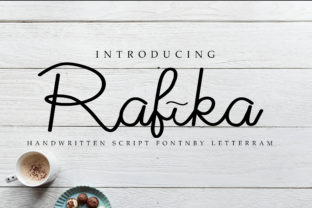
Rafika: A Practical Resource for Creative Professionals
In the crowded landscape of digital assets and creative tools, finding a resource that balances quality with genuine usability can feel like searching for a signal in noise. Rafika enters this space as a curated collection of design elements, templates, and creative assets aimed at professionals who need reliable material without endless browsing. This article examines what Rafika actually offers, its real-world performance, and whether it deserves a place in your workflow.
What Rafika Offers and Why It Matters
Rafika positions itself as a focused library of creative resources, primarily centering on templates, mockups, fonts, and graphic elements designed for digital and print use. Unlike sprawling marketplaces that overwhelm users with infinite options, Rafika takes a more selective approach. Each asset appears chosen for its practicality and aesthetic coherence, which reduces decision fatigue and speeds up project initiation.
The core value proposition is straightforward: provide professionals with high-quality, ready-to-use materials that require minimal modification. This matters because time is often the scarcest resource for freelancers, marketers, and small business owners. Spending hours customizing a template that barely fits the brief defeats the purpose of using pre-made assets. Rafika aims to solve that by offering items that are both flexible out of the box and structurally sound enough to withstand heavy editing.
Key Characteristics and Purpose
Rafika’s catalog leans toward modern, clean aesthetics with an emphasis on versatility. The purpose is not to sell a single style but to support a range of common professional needs: social media graphics, presentation decks, branding mockups, website layouts, and print materials like brochures or business cards.
Several characteristics stand out during evaluation:
- Curated selection: The inventory is noticeably leaner than large marketplaces, which helps users find relevant assets faster.
- Consistent file quality: Most items share similar resolution standards, layer organization, and format compatibility, reducing the surprise factor when opening a file.
- Clear licensing terms: Rafika provides straightforward usage rights, which is a practical relief for professionals who need to avoid legal ambiguity in client work.
- Regular updates: New additions appear at a steady pace, though the library never feels bloated with redundant items.
The purpose aligns well with intermediate to advanced users who know what they need and prefer a shortlist of dependable options over endless scrolling. Beginners may also find it approachable, provided they have basic proficiency with design software.
Real-World Performance and Usability
Testing Rafika assets in actual project workflows reveals a strong emphasis on file integrity. Templates open cleanly in their native formats—predominantly Adobe Photoshop, Illustrator, and InDesign, with occasional Figma or Sketch files. Layer naming is logical, and most files include a simple help document explaining key editable features.
Usability shines in scenarios where speed matters. For example, a freelance social media manager preparing a week’s worth of Instagram posts can pull a template, swap images and text, and export in minutes. The assets hold up well across different screen sizes and print dimensions, thanks to their vector-based elements and high-resolution raster files.
One area where Rafika performs notably well is mockup presentations. The mockups use smart objects and well-structured layers, making client presentations look polished without requiring hours of setup. This practical value is especially relevant for product designers, brand strategists, and marketers who need to showcase concepts convincingly.
However, usability is not without friction. Some templates assume a moderate level of software familiarity. Users who are new to layer masks, global swatches, or typography controls may find certain assets less accessible. In those cases, the learning curve shifts from the asset itself to the user’s skill set. Rafika does not currently offer extensive video tutorials or walkthroughs, which could be a limitation for absolute beginners.
Quality, Consistency, and Long-Term Value
Quality across Rafika’s library is generally high, though not uniform. The strongest assets are those in the branding and presentation categories, where attention to proportion, color harmony, and typographic balance is evident. Fonts included in the bundles are well-kerning and readable, which is not always guaranteed in free or low-cost resource libraries.
Consistency is one of Rafika’s genuine strengths. Unlike platforms where asset quality varies wildly between contributors, Rafika maintains a cohesive standard. Files are organized similarly, naming conventions follow predictable patterns, and resolution expectations remain stable. This reliability matters for professionals who work under tight deadlines and cannot afford to troubleshoot a poorly constructed file.
Long-term value depends on how frequently you produce visual content. For a blogger publishing weekly posts, a single Rafika template pack might cover months of material if reused creatively. For an agency producing dozens of unique client projects per month, the value lies in the time saved on initial setup rather than repeated use of the same asset. Subscription options, if available, can offer better value for high-volume users, while one-off purchases suit those with occasional needs.
A practical limitation worth noting is that Rafika’s collection, while curated, does not cover every niche. Users working in highly specialized fields—such as medical illustration, industrial engineering diagrams, or academic poster design—may find the library insufficient. Rafika serves general creative and marketing needs best, and its utility narrows for highly technical or unconventional projects.
Who Benefits Most and In What Situations
Rafika is not a one-size-fits-all solution, but several user profiles stand to gain clear advantages:
- Freelance graphic designers: Those juggling multiple small projects can leverage Rafika templates to produce consistent, client-ready work faster. The mockups alone justify the investment for branding gigs.
- Marketing professionals: Social media managers, content marketers, and email campaign specialists will appreciate the ready-to-edit social templates and presentation decks. The ability to maintain brand consistency across formats is a practical win.
- Small business owners: Entrepreneurs who handle their own marketing materials can use Rafika to create professional-looking assets without hiring a designer for every task. The templates offer a reliable starting point that still allows for customization.
- Educators and course creators: Those producing slide decks, worksheets, or promotional graphics for online courses will find Rafika’s clean style appropriate for educational contexts where clarity matters.
- Bloggers and publishers: Regular content creators who need featured images, infographic templates, or social media graphics can maintain a polished visual identity using Rafika assets as building blocks.
On the other hand, users with highly specific brand guidelines or unconventional design needs may find Rafika’s aesthetic range limiting. The library leans toward modern, minimal, and clean styles, so brands rooted in maximalist, vintage, or experimental aesthetics may need to supplement with other sources. Similarly, professionals who prefer designing entirely from scratch may not see the same value, since Rafika’s strength lies in accelerating workflows rather than replacing original creation.
Practical Recommendations for Getting the Most from Rafika
To maximize the usefulness of Rafika assets in your own work, consider these strategies:
- Audit your recurring needs: Before purchasing, list the types of projects you produce most often—social posts, client presentations, print flyers—and check whether Rafika offers relevant templates. This prevents buying a bundle that only partially addresses your workload.
- Customize beyond surface-level changes: Swap colors, adjust typography, and replace imagery to make each template your own. The best results come from using Rafika assets as a structural foundation rather than a final product.
- Build a local library of favorite assets: Download and organize files by project type or client. Over time, you will develop a personal shortlist that further reduces search time.
- Combine with your own original elements: Rafika assets work best when mixed with custom photography, unique icons, or brand-specific graphics. The templates provide consistency; your additions provide differentiation.
- Review licensing for commercial use: Confirm that the specific license covers your intended use—most Rafika assets allow for client deliverables, but double-check if you plan to resell templates or use them in digital products like e-books.
One additional observation: Rafika tends to perform better for users who already have an organized file management system. The assets come well-named, but your own folder structure and naming conventions will determine how quickly you can retrieve them during a deadline. Spending ten minutes organizing your downloaded assets after each batch purchase pays dividends later.
Evaluating Whether Rafika Fits Your Needs
Deciding whether Rafika is the right resource comes down to your workflow style, project diversity, and tolerance for customization. If you value speed and consistency and produce visual content in common formats, Rafika offers a practical shortcut that does not sacrifice quality. The assets are designed by people who understand real-world professional demands, and that shows in the file structure, resolution choices, and aesthetic decisions.
Conversely, if you work primarily in niche formats, require extreme stylistic specificity, or prefer building everything from the ground up, Rafika may feel too narrow or unnecessary. Its value is proportional to how much of your work aligns with its curated categories. There is no shame in using a resource that covers 60 percent of your needs while sourcing the remaining 40 percent elsewhere—that is a pragmatic approach to creative production.
Rafika also stands out in how it respects the user’s time. The library is not designed to keep you browsing; it is designed to let you find something useful and get to work. For professionals who view every minute as billable or productive, that orientation is itself a feature.
Ultimately, Rafika earns its place in the toolkit of many creative professionals by delivering what it promises: reliable, well-made assets that reduce friction in daily work. It does not try to solve every problem, and its limitations are honest. For those who operate within its strengths, it can become a quietly essential part of the workflow—one that you reach for without thinking, precisely because it works.