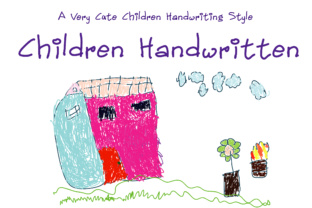
Children Handwritten: A Strategic Resource for Authentic Communication
In an environment saturated with polished digital fonts and AI-generated text, the unrefined quality of children's handwriting offers a rare form of authenticity. It carries a direct emotional weight that is difficult to replicate through standard design tools. For professionals across marketing, education, content creation, and brand strategy, understanding when and how to integrate children's handwriting into your work can differentiate your approach and deepen engagement. This is not about using a childish aesthetic for its own sake. Rather, it is about leveraging a genuine, human element to achieve specific outcomes.
Why Children Handwritten Content Resonates in Professional Contexts
The strategic value of children's handwriting lies in its inherent imperfection. Every wobble, uneven spacing, and unique letter formation signals that a real person created it. This perceived authenticity can build trust, especially in an age where transparency is increasingly valued by consumers and learners. When adults encounter handwritten elements from children, they often subconsciously associate it with innocence, sincerity, and personal effort. For entrepreneurs and marketers, this can humanize a brand, making it appear more approachable and less corporate. For educators and trainers, it can create a warm, relatable learning environment that encourages participation and emotional connection.
Beyond emotional resonance, children's handwritten content can serve as a powerful visual differentiator. In a crowded marketplace of ideas and products, a handwritten note, a logo drawn by a child, or illustrations in a child's script can stop the scroll and invite closer inspection. It signals that the creator values creativity and individuality over conformity. This strategic positioning can attract audiences who are tired of generic, mass-produced content and are seeking genuine, meaningful interactions.
Strategic Applications for Branding and Marketing
Using children's handwritten elements in branding requires careful thought. It is not a universal solution but can be highly effective in specific contexts. For businesses targeting family-oriented demographics, such as toy companies, children's book publishers, or educational apps, incorporating children's handwriting into logos, packaging, or promotional materials can feel natural and engaging. For example, a local bakery might use a child's handwritten price tags or menu boards to evoke a sense of warmth and community. A nonprofit focused on children's welfare might use handwritten letters from beneficiaries in their campaigns to tell powerful, authentic stories.
Marketers can also use children's handwriting in social media content, email campaigns, or website headers to add a layer of personality. The key is to ensure it aligns with the overall brand voice. A luxury brand, for instance, would likely find it jarring, whereas a creative studio or a family-owned business might use it to emphasize their human-centered values. When planning such an approach, define the emotional response you want to elicit—whether it's nostalgia, trust, or creativity—and test the execution with a sample audience to gauge reception. Avoid using children's handwriting solely for visual novelty; it should serve a clear strategic purpose that supports your positioning and long-term goals.
Integrating Children Handwritten into Learning and Development
For educators, parents, and professionals involved in curriculum design, children's handwriting is not just a stylistic tool but a fundamental part of cognitive development. However, the strategic use of children's handwritten work goes beyond traditional writing exercises. In a learning context, incorporating handwritten elements from children into educational materials—such as hand-drawn diagrams, notes, or storytelling—can boost engagement and ownership. When learners see work produced by their peers or by children of a similar age, it validates their own efforts and encourages risk-taking in their output.
Think about a classroom project where students create handwritten guides or posters for a science topic. These materials can be reused across different classes, providing authentic examples that resonate more deeply than sterile, printed diagrams. Similarly, in adult training or professional development, using children's handwritten analogies or illustrations can simplify complex concepts and add a layer of creative thinking. It can also serve as a brainstorming technique: ask team members to sketch or write ideas as if a child would, unlocking more intuitive approaches to problem-solving. This method respects the cognitive diversity that handwritten expression brings, moving beyond text-heavy, linear thinking.
Practical Considerations for Creative Professionals
For content creators, bloggers, designers, and freelancers, children's handwritten elements can be a unique asset in your creative toolkit. Use them sparingly to emphasize key points, add visual interest, or create a distinctive brand signature. For instance, a lifestyle blogger might use a child's handwritten title for a series of posts about family activities. A designer might incorporate hand-drawn arrows or annotations into infographics to guide the viewer's eye in a more organic way. The goal is to integrate these elements so they complement the overall design, not dominate it.
Planning this integration requires thoughtful execution. Start by collecting authentic samples from real children, with appropriate permissions. Scanning or photographing these at high resolution preserves the texture and nuance. Alternatively, you can convert the handwriting into a custom font, but be aware that this can reduce some of the authenticity. When using children's handwriting, consider the context: it works well in headers, pull quotes, or as background elements, but might be less readable for body text, especially in professional documents. Testing readability and accessibility is crucial. Also, think about the thematic relevance—using children's handwriting for a serious financial report could undermine credibility, whereas for a creative brief or a children's event, it adds charm.
Decision Framework: When and How to Use Children Handwritten Content
To use children's handwriting intentionally, follow a structured decision-making process. First, clarify your objective. Are you aiming to increase emotional engagement, boost memorability, simplify a message, or differentiate a brand? Each goal suggests a different application. For memorability, a single handwritten word in a call-to-action can be effective. For emotional engagement, a full handwritten note from a child might resonate deeply in a fundraising campaign.
Next, assess your audience. If your target demographic values polish and precision, children's handwriting might feel out of place. If they value authenticity and human connection, it can be a powerful asset. Conduct small tests or A/B experiments to measure impact before wide deployment. Also, consider the tone: children's handwriting typically conveys warmth, innocence, or playfulness. It may not suit serious, complex, or urgent messages unless balanced with other elements.
Then, evaluate the practical logistics. Do you have access to authentic samples? Can you obtain consent from parents or guardians for use in commercial contexts? Using actual handwriting adds authenticity but requires ethical handling. Alternatively, you can commission artists to emulate the style, but this may lose some genuine feel. Weigh the cost and effort against the expected benefits. For one-off projects, authentic samples might be ideal. For long-term brand assets, a customized font based on real handwriting could be a sustainable solution.
Finally, integrate with your existing strategy. Children's handwriting should not be an isolated tactic but part of a cohesive narrative. For example, if your brand emphasizes community and family, use handwritten elements consistently across touchpoints—from packaging to social media stories. This alignment reinforces your brand identity and ensures the element feels natural rather than forced.
Avoiding Missteps with Children Handwritten Content
Using children's handwriting without clear goals can lead to several risks. The most common is appearing gimmicky or condescending. If the audience perceives the handwriting as a cheap trick for attention rather than a genuine expression, it can erode trust. This is especially dangerous for brands in serious industries like healthcare or finance, where such an approach may be seen as unprofessional. Another risk is cultural insensitivity. Different cultures may have varying perceptions of children's work; what evokes nostalgia in one context might seem trivial in another. Research your audience's cultural background and values before implementing.
Accessibility is another consideration. Handwritten text can be difficult to read, especially for people with visual impairments or reading difficulties. If you use children's handwriting for critical information, provide complementary text or descriptions. Moreover, overusing the same handwriting style can diminish its impact. Rotate samples or vary the expression to maintain freshness. Finally, ensure you have proper permissions, especially when using children's handwriting for commercial purposes. Failing to do so can lead to legal and ethical issues, damaging your reputation.
Mitigate these risks by setting clear guidelines. Define where and how children's handwriting will be used—perhaps limited to specific campaigns, sections of a website, or product lines. Create a style guide that outlines acceptable contexts, font sizes, and pairing with other design elements. Regularly review the effectiveness of using children's handwriting against your strategic objectives, and be prepared to pivot if it doesn't yield the desired outcomes. The intentional use, not the random application, is what differentiates successful strategies.
By approaching children's handwriting as a thoughtful resource rather than a trend, you can harness its potential to create meaningful connections, enhance learning, and differentiate your work. It requires planning, ethical consideration, and alignment with your broader goals, but when done well, it adds a layer of humanity that digital tools alone cannot replicate.