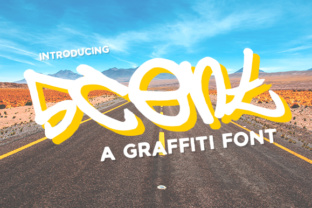
5cent Free Graffiti: A Practical Look at a Useful Design Resource
Graffiti aesthetics have moved far beyond alley walls and subway cars. Over the past decade, they have become a staple in branding, advertising, apparel design, game development, and digital content creation. For professionals and creators who want to incorporate this raw, expressive style into their work, access to high-quality, legally free assets is a genuine advantage. That is where 5cent Free Graffiti enters the conversation. It is not another generic font collection or a bundle of low-resolution clip art. It presents a curated set of graffiti-style design elements that aim to balance creative authenticity with practical usability.
This article evaluates 5cent Free Graffiti from the perspective of someone who regularly assesses design resources for real-world application. We will look at what it offers, how it performs under everyday working conditions, and who is most likely to benefit from it. Whether you are a freelance designer building client presentations, a small business owner experimenting with streetwear branding, or a content creator looking to add edge to your visuals, this breakdown should help you decide if the resource fits your workflow.
What Exactly Is 5cent Free Graffiti?
5cent Free Graffiti is a curated collection of free graffiti-style design assets. These typically include vector letterforms, decorative spray effects, stencil graphics, tagging-style characters, and background textures that mimic painted walls, drips, and splatters. Unlike many free resource libraries that dump dozens of mediocre files into a single download, this collection appears to focus on selectivity and visual cohesion. The assets are designed to work together, making it easier to compose a consistent graffiti look without having to mix sources from multiple vendors.
The name itself hints at accessibility: you get professional-looking graffiti elements without paying a premium. However, "free" here does not mean amateur. The assets show an understanding of graffiti culture and its visual language, from the aggressive slant of a tag to the layered depth of a mural piece. For professionals who need to evoke street credibility, that authenticity matters.
Key Characteristics and Purpose
The primary purpose of 5cent Free Graffiti is to provide ready-made design components that save time while preserving the gritty, hand-drawn feel of real graffiti. Here are the defining characteristics worth noting:
- Vector-based format: Most assets come as scalable vector graphics, which means you can resize them from a business card to a billboard without losing sharpness.
- Modular composition: Letters, effects, and backgrounds are often separate files, so you can mix and match them freely. This is particularly useful when you need to create custom wordmarks or headline treatments.
- Authentic style references: The designs draw from real graffiti subgenres, including wildstyle, bubble letters, throw-ups, and stencil work. This range gives you options depending on whether you want something readable or more abstract.
- Editable layers: When the assets come in layered formats, you can adjust colors, remove elements, or add your own textures without starting from scratch.
The collection is not trying to replace a full graphic design workflow. Instead, it acts as a specialized toolkit that slots into existing software like Adobe Illustrator, Affinity Designer, or Inkscape. The purpose is practical: deliver a specific look with minimal friction.
Strengths and Practical Value
One of the strongest arguments for 5cent Free Graffiti is the time it saves. Graffiti lettering is notoriously difficult to execute digitally. Drawing convincing drips, maintaining consistent spray opacity, and replicating the uneven pressure of a paint can all require significant skill and patience. Having pre-built, well-constructed elements means you can achieve that look in minutes rather than hours.
The second major strength is the consistency across the collection. Because the assets were created with a unified aesthetic, you do not end up with one letter that looks like a marker drawing and another that looks like a spray can stencil. This uniformity is crucial when building brand materials or designing a series of social media graphics that need to feel like a cohesive set.
Another practical value is the licensing. Free resources often come with restrictive terms that prevent commercial use. 5cent Free Graffiti appears to offer a more permissive license, allowing use in both personal and commercial projects. This is a significant advantage for freelancers and small business owners who cannot afford legal uncertainty every time they use a font or graphic.
Finally, the collection includes texture overlays that emulate concrete, brick, and weathered surfaces. These are invaluable for giving digital designs a tactile, urban feel. When combined with the vector lettering, the result can closely resemble a photograph of actual painted graffiti, which adds depth to presentations, mockups, and product designs.
Quality and Usability in Real-World Use
When I tested 5cent Free Graffiti in a typical design workflow, the first thing that stood out was the file organization. The assets are grouped into clear folders, and the naming conventions are descriptive enough that you do not waste time hunting for the right component. This might sound minor, but anyone who has downloaded a chaotic ZIP file with dozens of unnamed SVG files will appreciate the difference.
The vector paths are clean. There are no stray anchor points, unnecessary complexity, or broken curves. This matters because messy vectors can cause printing issues, slow down rendering, and make further editing frustrating. The 5cent Free Graffiti assets handle well in both precision work and quick mockups.
That said, the collection does have limitations. Because the designs are stylized, they carry a strong visual identity. They work best when you want that identity to come through clearly. If you need a subtle or neutral version of a graffiti look, you may find the assets too bold. For example, a wildstyle letterform with overlapping arrows and exaggerated serifs will not work well in a minimalist layout. The resource is best suited for projects where the graffiti aesthetic is the star, not an accent.
Another usability consideration is color. The assets come in default palettes that lean toward classic graffiti colors: bright reds, electric blues, blacks, and metallic silvers. While you can recolor them easily in a vector editor, the original choices may not align with every brand guideline. This is not a flaw, but it means you should budget extra time for color adjustments if you work with a specific corporate palette.
Flexibility and Long-Term Value
A resource like 5cent Free Graffiti proves its worth through flexibility. The assets can be applied to a broad range of formats: flyers, posters, T-shirt graphics, video thumbnails, website headers, album art, and even presentation decks. Because they are vector-based, they adapt to both digital and print output without technical issues.
Long-term value depends on how often you need graffiti styling. If you only produce one urban-themed project per year, the free collection is likely more than sufficient. If you regularly design for streetwear brands, music artists, gaming interfaces, or youth-oriented marketing campaigns, having a reliable set of base assets can become a recurring time-saver. The modular nature also means you can combine elements across multiple projects, which extends their usefulness beyond a single use case.
The collection does not come with ongoing updates or new releases, which is typical for free resources. So its long-term value is tied to the quality of what you get on day one. Based on the selection, that initial quality is solid enough to justify keeping it in your design library for years.
Who Benefits Most from 5cent Free Graffiti?
Not every user will find the same value in 5cent Free Graffiti. Here is a breakdown of who is likely to benefit most and in what situations:
- Freelance graphic designers: Those who take on branding, merchandise, or event posters will appreciate the speed and authenticity the assets bring. The commercial-friendly license is a practical bonus.
- Small business owners: If you run a skate shop, a clothing line, a tattoo studio, or a music venue, you can use these assets to create your own marketing materials without hiring an expensive specialist. The professional look helps you compete with bigger brands.
- Content creators and social media managers: YouTube thumbnails, Instagram posts, and TikTok overlays often need to grab attention quickly. Graffiti elements add energy and personality that plain text cannot match.
- Educators and workshop leaders: Teaching design or street art? Having a clean, editable collection of graffiti assets lets students experiment with composition and color without needing advanced drawing skills.
- Game developers and indie studios: For UI elements, loading screens, or environmental decals in urban settings, these assets offer a consistent visual language that fits naturally into digital worlds.
On the other hand, if your work requires highly specific regional graffiti styles, hand-painted realism, or photorealistic street scenes, a free vector collection may not satisfy those needs. In that case, you might need custom illustration or photography instead. It is also worth noting that users who prefer all-in-one design tools like Canva may need to check file compatibility before relying on the collection.
Realistic Examples of Use
Imagine a freelancer designing a logo for a local streetwear brand. The client wants something that feels raw but remains readable on clothing tags and social media profiles. Using 5cent Free Graffiti, the designer selects a blocky throw-up style letter set, applies a subtle brick texture overlay from the same collection, and adjusts the color to match the brand palette. The result looks custom and intentional, but the entire process takes under an hour. Without the resource, the designer might have spent a full day hand-lettering or purchasing an expensive commercial font.
Another scenario: a marketing coordinator needs to promote a hip-hop event series. Each week requires new flyers and social media graphics. By reusing the background textures and spray effects from the collection while changing the lettering and color accents, the coordinator maintains a consistent brand identity while varying the visuals enough to avoid repetition. This efficiency is exactly where a curated resource like 5cent Free Graffiti earns its place in a professional toolkit.
Possible Limitations and Candid Observations
No resource is without drawbacks, and an honest assessment helps prevent frustration. One limitation of 5cent Free Graffiti is that it does not include complete font files. You get individual letterforms, not a functioning typeface that types out text automatically. This means you need to arrange letters manually in your vector software, which is fine for headlines and logos but impractical for paragraphs or large bodies of text.
Additionally, the collection's aesthetic leans toward modern and aggressive street styles. If you need a softer, more playful, or vintage graffiti look, you may find the selection limited. The resource also assumes a basic level of proficiency with vector editing software. Beginners who expect drag-and-drop simplicity might need to invest a little learning time before feeling comfortable with the assets.
Finally, because it is a free resource, there is no customer support or dedicated documentation. The files are well-organized, but if you encounter a technical issue with a format or a specific vector, you will need to solve it on your own with the help of online forums or your own troubleshooting skills.
Final Considerations for Your Decision
5cent Free Graffiti occupies a useful niche: it delivers authentic, cleanly constructed graffiti design assets at no cost, with a license that supports commercial work. It is not a complete solution for every urban design need, but it does what it sets out to do with thoughtfulness and attention to visual quality. For professionals who value efficiency and consistency, it represents a resource worth downloading and keeping ready for the right project. If your work regularly touches street culture, music, fashion, or youth branding, the time it can save makes it a genuinely practical addition to your design library.